
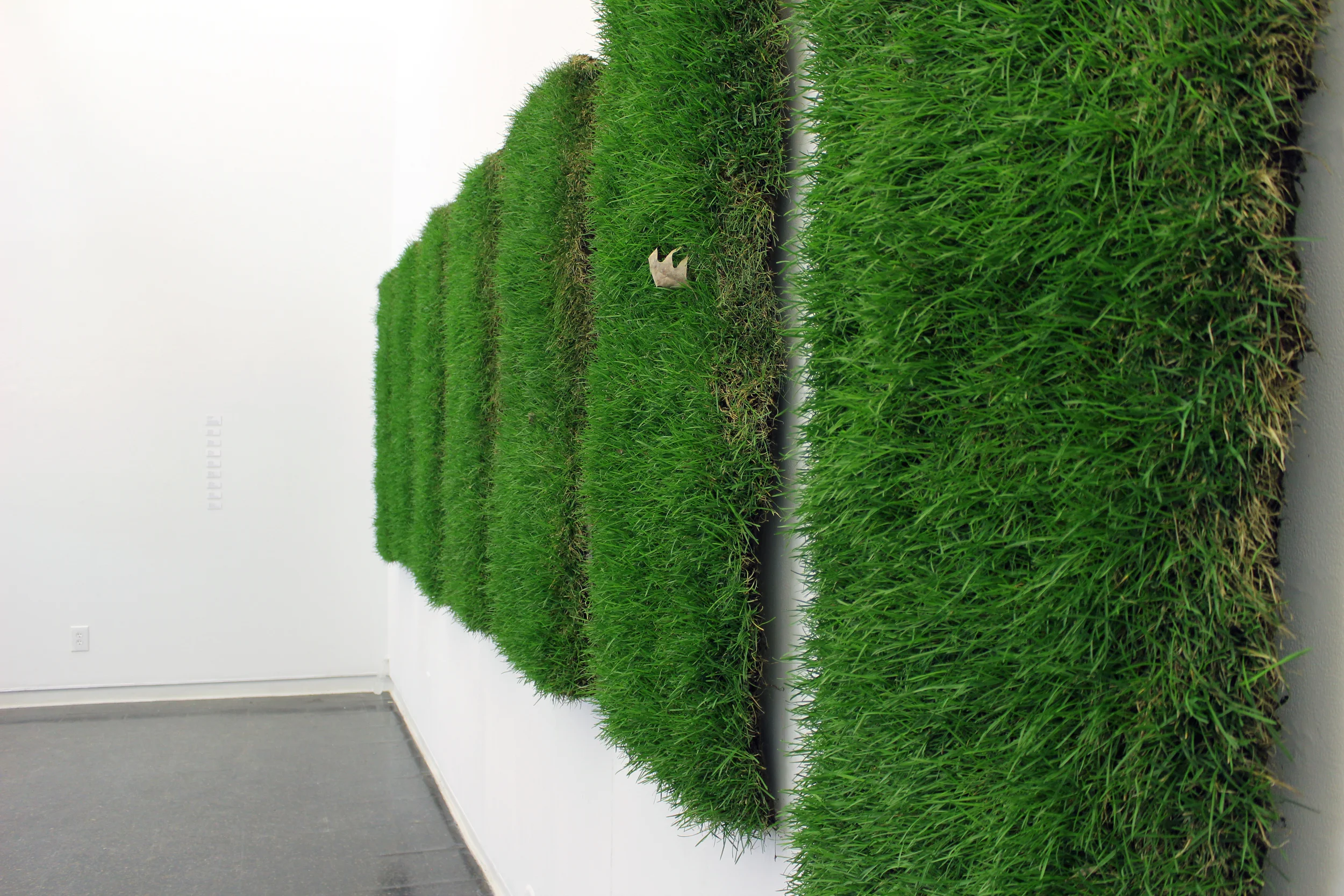
A Growing Problem
2015 BFA Senior Thesis
A Critical Analysis of a Western Tradition
The green lawn of the middle and upper classes of developed nations has always been a symbol of wealth and prosperity. The symbolism is so strong that it has become a keystone to “The American Dream” that so many use to validate their decisions, perceptions of success, and ideologies. This aspect of American culture is one substructure in our destructive and opulent throw-away society. The modern lawn originates from the manicured English landscape gardens which became popular among nobility in Britain during the 17th and 18th centuries. The homogeneous fields of nonindigenous, nonproductive green grass may be on the top of the list of wasteful traditions that Americans engage in and maintain to this day.
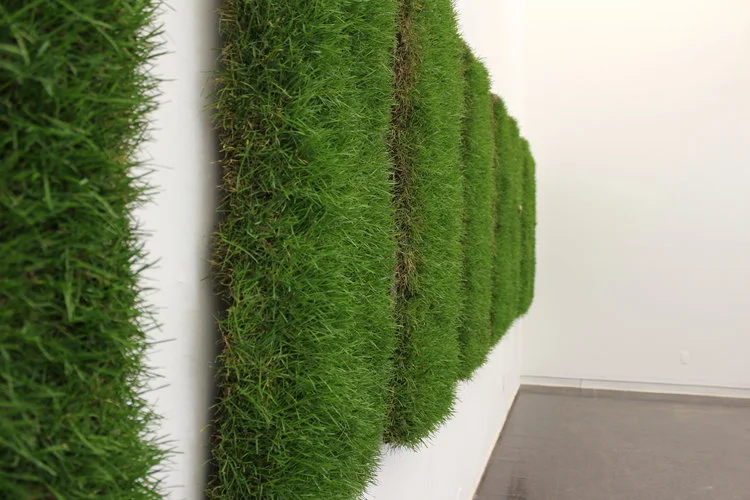
Over 80% of American homes have lawns. A great deal of time, money, and resources are spent on maintaining them. In a government study, all of the land and all of the available fresh water used to grow the country's corn, alfalfa, soybeans, cotton, pastureland, wheat, orchards, vineyards, nut trees, and non-alfalfa hay do not equate to the amount of land and water devoted to unproductive private residential lawns. There is a critical water crisis in heavily populated areas of the country, with the most heavily affected being in the southwest.
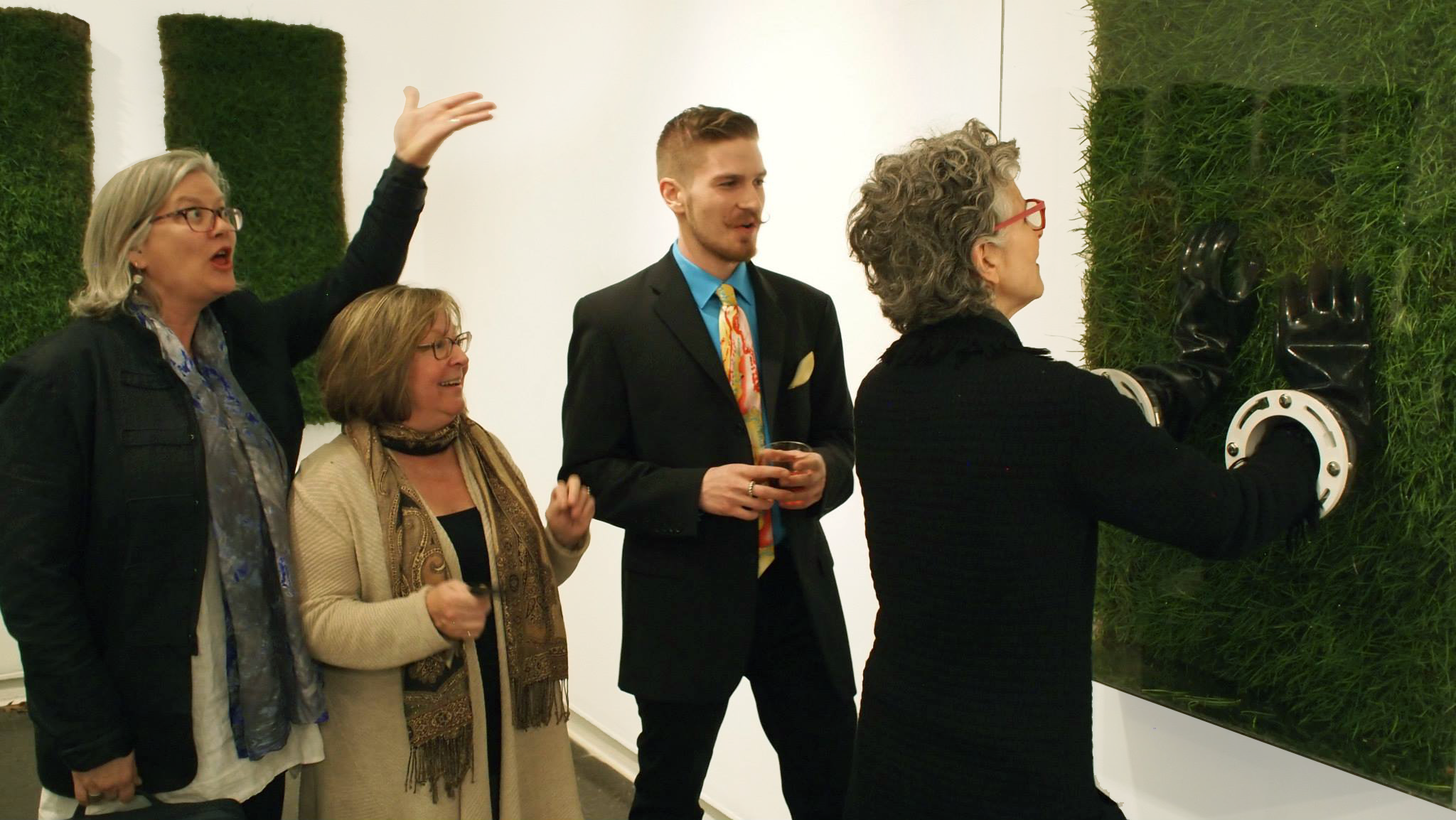
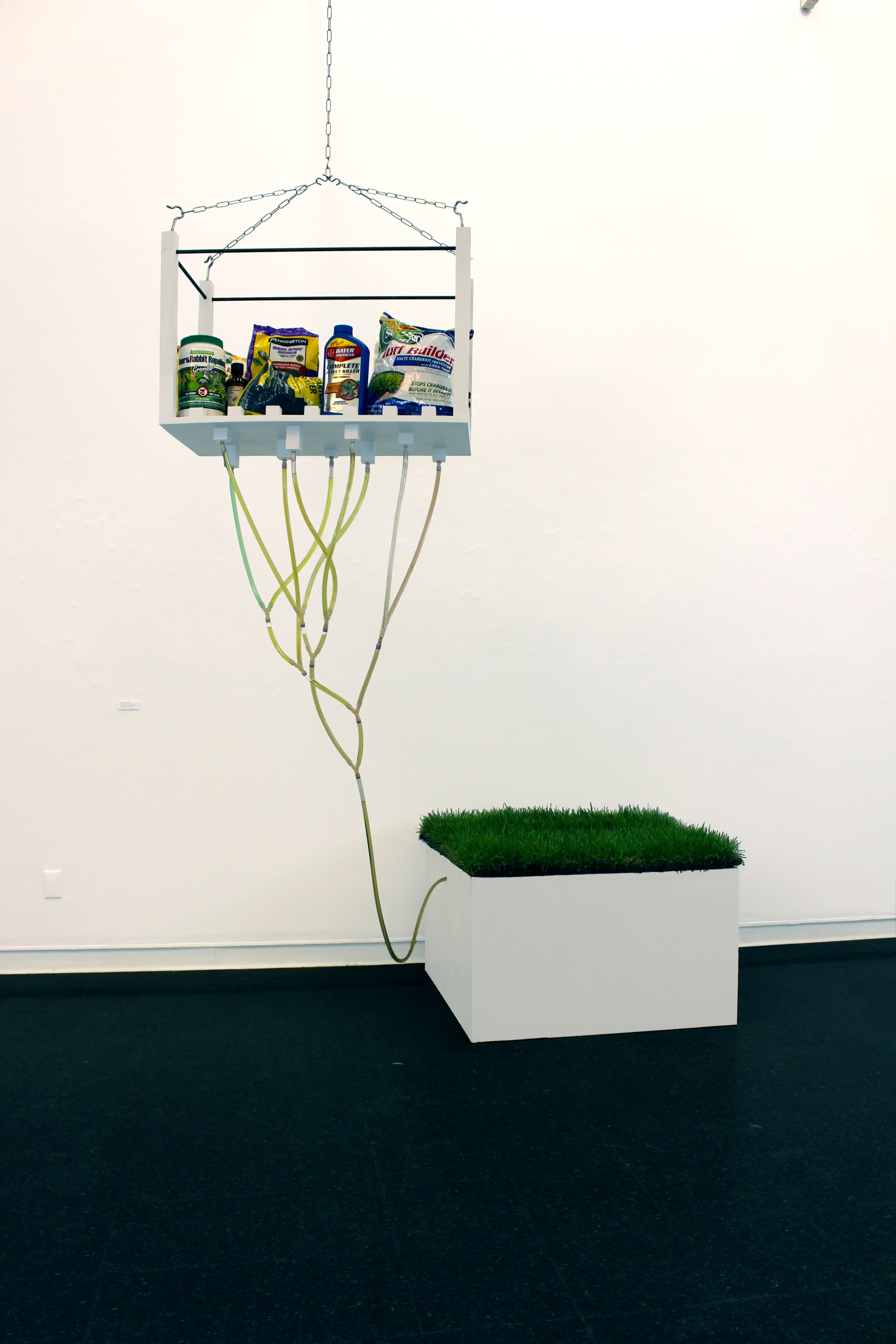
We dump 67 million pounds of insecticides and pesticides, while spending over $6.2 billion annually on chemicals to grow our lawns. Many of these chemicals are extremely volatile and hazardous to everything that touches them, including ourselves. Caution: Do Not Touch Grass addresses the toxification of the land we come into contact with the most. Experiencing the grass through the protective gloves robs the viewer of the satisfaction of feeling the grass through one’s fingers.
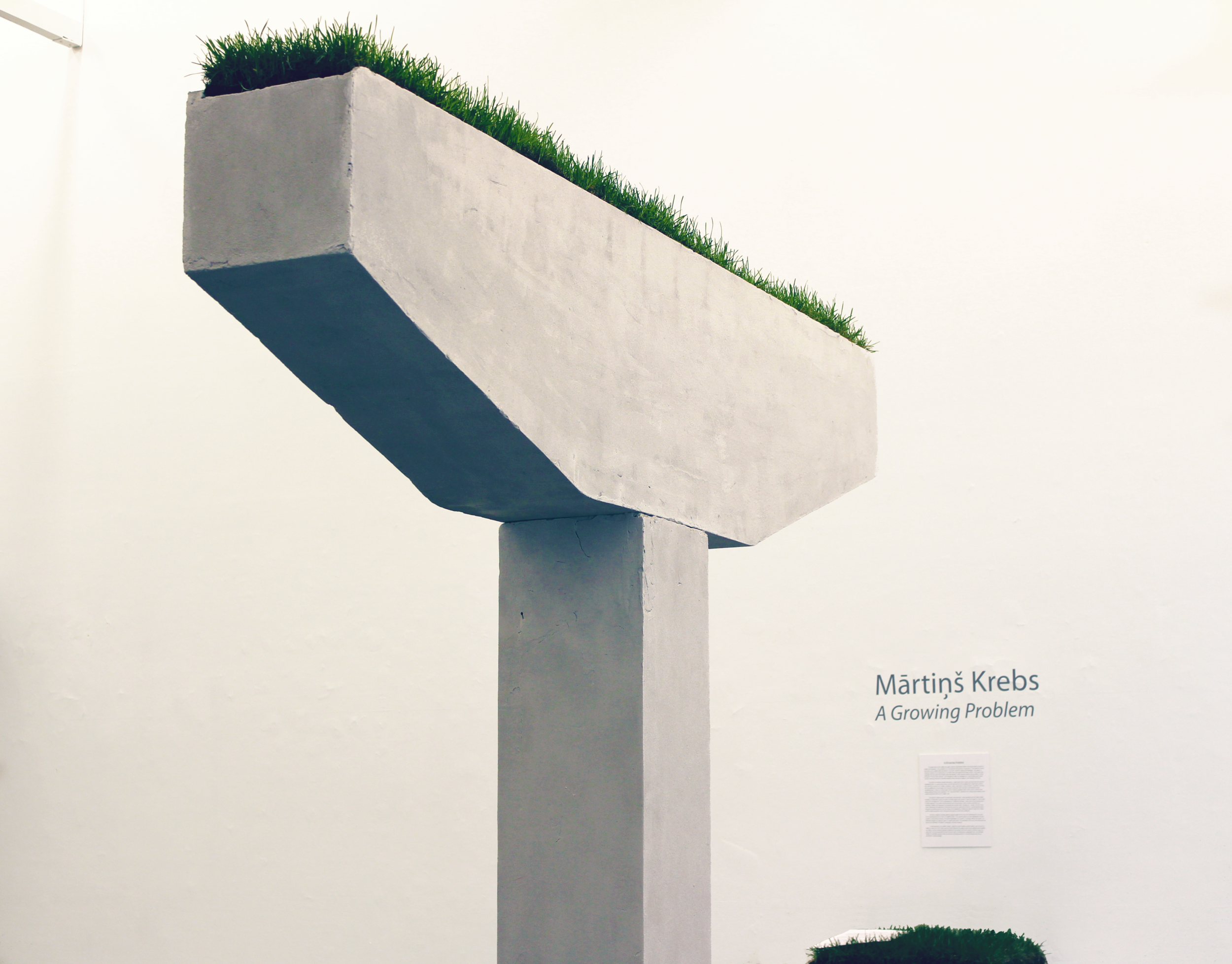
We have created an entirely artificial support system for the care and maintenance of our lawns. This is represented by Ruins of Traditions Past. The support system we have established, like any system, is impacted by entropy: the natural degradation of a system. As entropy affects the system, our artificially propped-up supports begin to crumble and buckle. The materiality of the work also expresses the illusion and artificiality of the tradition.
A well-kept lawn is an outdoor refuge, a place for touch football and summer parties, and is known by realtors to add up to 10% to the value of a home. Beyond curb appeal, lawns bring neighborhoods together, providing a common element between residents and the outdoors; but this comes at a great cost. We have blanketed the land we live in with a nonproductive, perpetually toxic, and obsolete tradition of unbridled opulence that has become a growing problem for our forthcoming future as our populations explode globally.
B.F.A. 2015